AskAwayHealth
Painful Ejaculation: What It Means When He Gets It!
July 5, 2025
Do you ever wonder if guys get sperm pain, aka Painful Ejaculation?
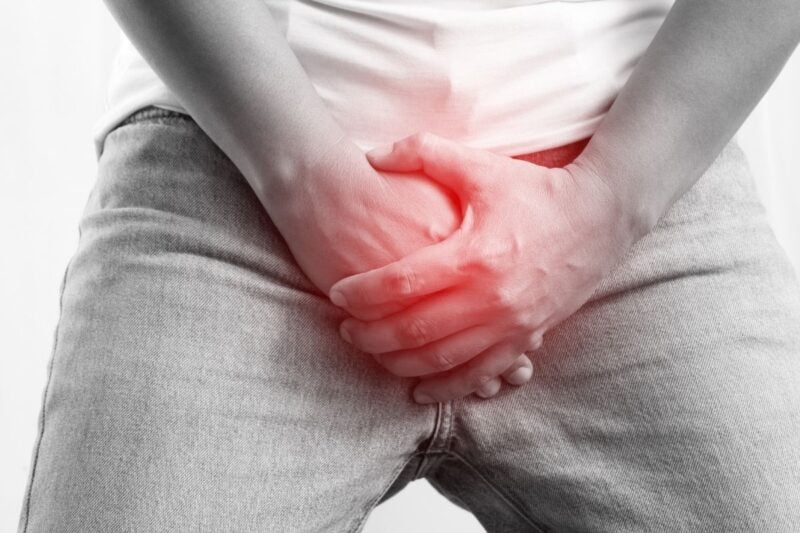
Most times, we discuss painful ovulation or women getting pain during sex. So let’s turn the tables today and ask – Do men get ‘sperm pain’?
Meaning… pain that occurs during or after ejaculation. And yes, absolutely, ejaculation pain is a real problem.
It may be mild or more severe from one man to the next, but whichever the case, please see your doctor to check it out.
What is Painful Ejaculation?
Painful ejaculation is what happens when a man feels pain along any aspect of his genital organ that contributes to ejaculation.
There are several small, closely related parts that have to work properly for ejaculation to happen.
Here’s a list of every part involved and what they do:
- The Prostate (a small gland found only in men and trans women. It surrounds the tube that carries urine out of the body (urethra).
- The prostate gland produces a thick, white fluid that mixes with sperm to create semen.
- Testicles, the oval organs in the scrotum behind the penis where the body makes sperm
- Epididymis is a structure at the back of the testicles which stores and develops sperm
- Vas deferens, the tube connecting the testes with the urethra (urinary tube)
- Seminal vesicles are coiled tubes (glands) that lie behind the urinary bladder. They produce fluid that partly makes up the seminal fluid.
- The ejaculatory duct is the tube for fixing and storing sperm and semen before ejaculation
- Bulbourethral glands contribute fluid that helps to lubricate the urethra.
- The penis the male sexual organ that also functions as the outlet for urination.
Are You at Risk of Painful Ejaculation?
Painful ejaculation may be a common event, but we don’t know how frequently it happens, as many men find it embarrassing to admit their experience.
Despite the uncertainty over numbers, there are certain groups of people who may be at risk, so who are they?
First, men with conditions affecting the prostate are more likely to develop sperm pain or painful ejaculation.
Benign prostatic enlargement (BPE) is a condition where a man’s prostate gland gradually grows in size as he ages. It is not the same as prostate cancer, but it can result in very disabling problems.
Another category at risk includes conditions where there is difficulty passing urine, which can mean a host of different issues such as:
- Passing urine frequently,
- A sudden need to pass urine or
- Being unable to control the bladder (incontinence). These symptoms may occur more often with painful ejaculation.
What Does Sperm Pain Feel Like?
First, let’s address a common enquiry: Is it normal to feel pain after ejaculation?
Ejaculation is the forceful release of seminal fluid or ejaculate from the penis.
It happens under the control of nerves, blood circulation and hormones from the brain and the genital organs. Usually, it is painless usually happening with a heightened sense of pleasure and satisfaction.
In painful ejaculation, some of the other symptoms you may have are:
- A sensation of burning when ejaculation
- Experiencing a dull pain when ejaculating
- Some men may feel a sharp pain during ejaculation
- There could be other features like pain during ejaculation left side
- Some may have painful ejaculation and urination
- Others have pain during ejaculation but not urinating
- Another symptom is pain during ejaculation and blood
Various Causes of Ejaculation Pain
- Infection. This could happen from a sexually transmitted infection which causes pain – there may also be a bloody discharge or other symptoms. Some of these infections are gonorrhoea, trichomoniasis or chlamydia.
- The other condition associated with infection is known as Prostatitis. Prostatitis means inflammation in the prostate gland and is most often caused by a bacterial infection in the prostate gland. This is not always sexually transmitted, and some chronic prostatitis is not caused by infection. Anal sex, Diabetes Mellitus, and a weak immune system are some cases where a man can develop prostatitis. So STI and prostatitis are conditions leading to painful ejaculation.
- Drugs. What medications cause painful ejaculation? Some drugs can lead to painful ejaculation as a side effect. They include antidepressants. Some of them lead to sexual dysfunction, including painful ejaculation. Typical examples are drugs in the class of SSRIs (e.g. Citalopram or Sertraline), SNRIs (e.g. Venlafaxine or Duloxetine), or TCAs (e.g. Amitryptiline).
- Blockage in the ejaculatory duct or tube can happen from stones or cysts in the tube, preventing the free flow of sperm and leading to painful ejaculation and infertility.
- Surgery or Radiotherapy. Treatments radiotherapy for conditions like prostate cancer may cause temporary painful ejaculation. Similarly, prostate surgery for prostate cancer may also have a side effect of a problem with an erection or painful ejaculation. Some men can also develop pain during ejaculation after hernia surgery.
- Damage to nerves or muscles around the pelvis can lead to pain around the genitals, rectum, and anus. This can cause pain during orgasm or afterwards in men. Men who have Diabetes Mellitus, Multiple sclerosis or who have suffered trauma to the area may experience damage to the nerves.
- Psychological causes – here, there are no obvious physical causes. But if there is no pain with masturbation, it may be an emotional cause that a therapist can look into.
Treating Causes of Ejaculation Pain
These are some of the leading causes of sperm pain, and if you experience painful ejaculation, get it checked out to ensure the proper treatment.
Treatment should depend on the cause and should likely settle when the cause is addressed.
More Reading
Editing by AskAwayHealth Team
Disclaimer
All AskAwayHealth articles are written by practising Medical Practitioners on various healthcare conditions to promote quality healthcare.
The advice in our material is not meant to replace a qualified healthcare practitioner’s management of your specific condition.
Don’t hesitate to contact a health practitioner to discuss your condition or reach us directly here.
Image Credits: Canva
Review Date
This post will be medically reviewed by July 2027
Want to know how your comment data is processed? Learn more

Leave a comment
Please fill in the field below to add a comment.