AskAwayHealth
These aren’t random — they’re menopause: 8 symptoms nobody warned you about
June 12, 2026
You’ve been to multiple doctors. You’ve had your ears checked, your shoulder referred to physio, your heart monitored — and nobody once mentioned menopause. What you’re experiencing isn’t random. It isn’t in your head. And you’re about to get a proper explanation.
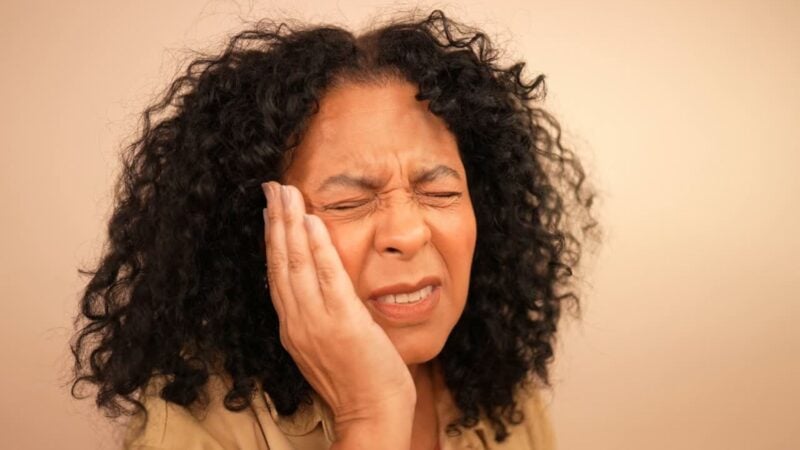
Watch first: These aren’t random — they’re menopause: 8 lesser-known symptoms
Why your body feels like it’s falling apart (it’s not)
Before we get into the list, there’s one piece of context that makes everything else make sense.
Oestrogen isn’t just a reproductive hormone. It is an anti-inflammatory, a bone protector, a nerve regulator, a collagen builder, and a cardiovascular stabiliser. It has receptors in your brain, your ears, your eyes, your joints, your skin, your gums, and your heart.
When oestrogen levels drop — as they do during perimenopause and menopause — every single one of those systems feels it.
That’s why your symptoms feel so disconnected. They’re not. The connecting thread is oestrogen.
The 8 lesser-known menopause symptoms (and what they’re actually called)
1. Electric shock sensations — formication and dysaesthesia
This is the one that sends women to A&E convinced they’re having a stroke. A sudden, brief sensation — like an electric shock underneath the skin, in a limb, or sometimes just before a hot flush.
It has a name: dysaesthesia. It’s caused by falling oestrogen levels affecting the nervous system — specifically, the way electrical signals travel along nerve fibres.
It is not a stroke. Or a heart attack. It is menopause.
If you are concerned about stroke symptoms — sudden facial drooping, arm weakness, or speech difficulty — call 999 immediately. But if this is a brief, recurring sensation that started alongside other menopausal changes, please mention it at your next GP appointment.
2. Tinnitus — ringing, buzzing, or humming in the ears
The inner ear has oestrogen receptors. When oestrogen drops, the delicate hair cells in the inner ear become more sensitive and less stable — and the result is ringing, humming, or buzzing with no external source.
Studies show that tinnitus is more common in perimenopausal and menopausal women. It can have many causes — but if yours started in your 40s or early 50s alongside other changes, please ask the question.
3. Frozen shoulder — adhesive capsulitis
A frozen shoulder — stiff, painful, sometimes impossible to lift your arm above your waist — is significantly more common in perimenopausal women.
Oestrogen normally maintains the elasticity and lubrication of your joint capsules. Without it, the tissues in the joint become thicker and tighter.
Treatment includes physiotherapy and, in many cases, hormone replacement therapy (HRT). If you’ve been referred to physio without anyone mentioning your hormones, it is worth raising this directly.
4. Burning mouth syndrome and gum changes
Oestrogen helps maintain the mucous membranes throughout your body — including your mouth. When it drops, you may notice:
- A burning sensation on your tongue or the roof of your mouth
- Increased sensitivity to hot or cold food and drink
- Gums that bleed more easily or appear to be receding
Many women assume they’re brushing their teeth wrong or need a new toothpaste. Tell your dentist you’re perimenopausal — and mention the burning mouth sensation to your GP. Both matter.
5. Body odour changes
This one is embarrassing to mention — which is exactly why I’m mentioning it.
Night sweats change your skin microbiome — the bacteria that live naturally on your skin. Oestrogen also affects the apocrine sweat gland, which produces the sweat that interacts with bacteria to cause body odour. Women in perimenopause or menopause often notice their body odour is stronger or different in character — even when their hygiene routine hasn’t changed at all.
This is physiological. It is not you.
Breathable, moisture-wicking fabrics help in the short term. But addressing the underlying hormonal picture — rather than just managing the symptom — is the real solution.
6. Heart palpitations
The sensation of your heart skipping, racing, or fluttering is a recognised menopause symptom. Oestrogen has a direct effect on heart function and heart rate regulation. When levels fluctuate — as they do during perimenopause — the heart feels it.
Any palpitation needs to be properly assessed. Please see your GP and ask for an ECG (electrocardiogram). Once cardiac causes have been ruled out, please know: hormones could be contributing — and this is treatable.
7. Musculoskeletal syndrome of menopause
This syndrome was only formally named a few years ago — which is why many GPs, and most patients, haven’t heard of it.
Musculoskeletal syndrome of menopause (MSM) describes the joint pain, muscle ache, tendon inflammation, and increased risk of muscle tears that come with oestrogen loss. Women in their 40s and 50s develop aches that get blamed on ageing or overdoing it at the gym.
It’s not just ageing. It has a name. And it responds to treatment.
8. Itchy skin — without a rash
This is different from the electric shock sensation in symptom one. Women experience a persistent prickling, crawling, or itchy sensation — particularly on the scalp, arms, or legs — with no rash, no obvious cause, and no response to antihistamines, even the strong ones.
Oestrogen maintains skin thickness and moisture. When it drops, the nerve endings in the skin become hypersensitive. If your itching is worse at night, changes with your cycle, or came on alongside other menopausal symptoms — please mention that specifically in your appointment.
Download the free Perimenopause Clarity Tool — identify what’s happening to your body and know exactly which questions to take to your GP
When to seek help — red flags vs routine review
| Symptom | See your GP within 1–2 weeks | Seek help today |
|---|---|---|
| Electric shock sensations (brief, recurring) | ✅ Mention at your next appointment | 🚨 Sudden onset with facial drooping or limb weakness — call 999 |
| Tinnitus | ✅ GP review | 🚨 Sudden hearing loss alongside tinnitus — same-day assessment |
| Frozen shoulder | ✅ GP or physio referral | 🚨 Caused by trauma or injury |
| Burning mouth / gum changes | ✅ GP and dentist review | 🚨 Difficulty swallowing alongside symptoms |
| Body odour changes | ✅ GP review if persistent | — |
| Heart palpitations | ✅ GP for ECG | 🚨 Chest pain or breathlessness — call 999 |
| Joint and muscle pain (MSM) | ✅ GP review | 🚨 Hot, swollen joints — same-day review |
| Itchy skin without rash | ✅ GP review | 🚨 Rash with fever or rapid spreading |
What to say to your doctor so you’re actually heard
Showing up and saying “I feel strange” is valid — but it may not get you very far. Here’s the language that changes the conversation.
For electric shock sensations: “I’ve been experiencing brief electric shock sensations that started when my hot flushes began. I’d like to discuss whether this could be dysaesthesia related to perimenopause.”
For joint pain: “I’ve read about musculoskeletal syndrome of menopause. Could we explore whether my joint pain is related to oestrogen loss?”
For tinnitus: “My tinnitus started in my mid-40s alongside other changes. Could menopause be a contributing factor?”
Naming the condition changes the conversation. Every single time.
Your 3-step action plan
- Write the list. Every symptom — the obvious ones and the strange ones. Bring the entire picture to your appointment, not just the ones you feel least embarrassed about.
- Name it. Say it. You are allowed to have a hypothesis. GPs are trained to explore patients’ ideas, concerns, and expectations. If your doctor doesn’t ask — offer them.
- Don’t let it get dismissed. If your GP isn’t connecting the dots, ask directly: “Could these symptoms be related to perimenopause?”
[Note for publishing: embed a second relevant video here — suggested: your HRT explainer or perimenopause overview video from the channel]
The bottom line
These eight symptoms are not random, and they are not in your head. They are the body’s predictable response to falling oestrogen. The earlier you name them, the sooner you get the right support. Take this list to your next appointment — you now have both the language and the evidence to ask for the care you deserve.
Have you experienced any of these symptoms and been told it was “just stress”?
Drop a comment below — your story might be exactly what someone else needs to read at 2am. → Join the Askaway Community Newsletter on Substack → [YOUR SUBSTACK URL — please confirm before publishing]
Similar topics
Review date
This post will be medically reviewed by June 2028
About the author
Dr Sylvia Kama-Kieghe (FRCGP, FRSM, FRSPH) is a UK-based NHS General Practitioner with over 15 years’ experience in family medicine and women’s health. She is the founder of AskAwayHealth and works clinically in primary care, urgent care and digital health.
She is a honorary lecturer at the University of Sheffield Medical School, and involved in teaching and supervising trainee doctors. Her clinical practice includes a strong focus on menopause, menstrual and fibroid-related problems, vulval and vaginal health, and preventive care for women across the life course.
Dr Sylvia is the RCGP (Royal College of General Practitioners) 2026 Digital Champion and has been shortlisted multiple times for the CAHN Black Healthcare Awards for her work in reducing health inequalities. She also collaborates with the Patient Information Forum (PIF) on projects tackling online health misinformation and improving the quality of patient information.
Through the AskAwayHealth YouTube channel and website, Dr Sylvia aims to provide clear, calm and clinically sound explanations that help women understand their symptoms, know which red flags to look for, and feel more confident when speaking to their own doctors.
Medical disclaimer: This post is for educational purposes only and does not constitute medical advice. Reading this content does not create a doctor-patient relationship with Dr Sylvia or AskAwayHealth. Always consult your own GP or healthcare provider about your individual circumstances. If you are experiencing a medical emergency, call 999 or attend your nearest A&E.

Want to know how your comment data is processed? Learn more

Leave a comment
Please fill in the field below to add a comment.