AskAwayHealth
PCOS New Name: Why It’s Now Called PMOS and What It Means for You
May 23, 2026
By Dr Sylvia Kama-Kieghe, FRCGP — NHS GP & Women’s Health Doctor
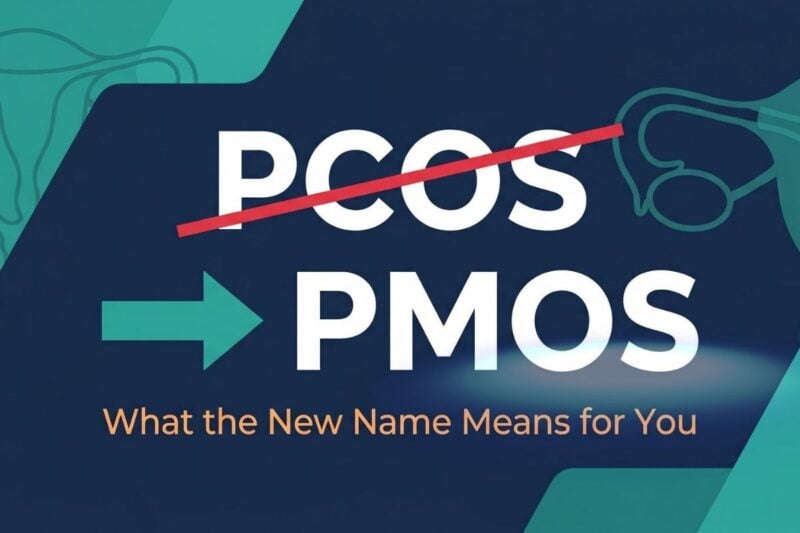
If you’ve ever been told your scan was “normal” so you can’t have PCOS — or that your symptoms are “just stress” — the name change you’re about to read is going to validate everything your body has been telling you for years. The world’s most respected medical journal has just scrapped the name PCOS. And the reason why matters more than you think.
Watch First: PCOS is Now PMOS: A Doctor Explains the Reasons Behind the Name Change
What Actually Happened: The Lancet PMOS Consensus 2026
In May 2026, The Lancet — one of the world’s most respected medical journals — published a landmark consensus statement. It was the result of a 10-year global review involving 22,000 patients and experts. The conclusion was clear:
The name Polycystic Ovary Syndrome (PCOS) no longer accurately describes what is happening in the body.
The new name is Poly Endocrine Metabolic Ovarian Syndrome — or PMOS.
Before your eyes glaze over at yet another medical acronym, here’s why this matters — especially if you were ever told your scan was “normal” so you couldn’t have PCOS.
Why “PCOS” Was Wrong: Cysts vs Follicles
Here’s what you probably didn’t hear when you were first diagnosed:
Most women with PCOS don’t even have cysts. Not real ones.
The “cysts” seen on ultrasound are actually follicles — immature eggs that haven’t developed yet. They are NOT the same as the cysts found in endometriosis or ovarian cyst conditions.
That word — cystic — has been doing real damage for years:
- Women told “you don’t have cysts, so you can’t have PCOS”
- Women dismissed, left without answers
- Women whose blood tests were “borderline” sent away
Well, that ends now.
The new name — Poly Endocrine Metabolic — reflects what’s actually going on. This is a hormonal condition and a metabolic condition.
It affects your:
- Insulin levels and resistance
- Androgens (male hormones)
- Inflammation levels
- Heart and cardiovascular system
- Mental health
The ovaries are involved — but they were never the whole story.
How PMOS Changes Your Diagnosis
So what actually changes for you as a patient? Here’s my honest GP answer:
1. Broader Diagnostic Criteria
The new framework for diagnosis is broader. This is especially important for Black and South Asian women, who are more likely to have severe metabolic features. An example is insulin resistance at lower body weights.
They are also more likely to be missed for a PMOS diagnosis because the old criteria were built around how this condition presents in white women. The new, broader framework helps close that gap. This new name asks doctors to look at the full picture, not just compare you to a checklist that was never designed for you.
More women will now qualify for a PMOS diagnosis, including women who were told their blood tests were “borderline” or “not quite PCOS.” If you were ever told you don’t meet the criteria — it may be worthwhile going back.
2. Whole-Person Care (Not Just Periods)
Under the old model, the focus was often on fertility and your periods. The new model asks GPs to look at:
| Old Model Focus | New Model Focus |
|---|---|
| Periods & fertility | Plus: Cardiovascular risk |
| Ovarian cysts | Plus: Insulin resistance |
| Reproductive symptoms | Plus: Bone health & mental health |
If your GP has only ever talked to you about your periods — this is your moment to ask the right questions. (I’ll give you those exact questions below.)
3. Better Research, Better Treatments
A clearer name means clearer research targets. Treatments specifically designed for the metabolic side of this condition are already in development.
This rename has opened that door.
What Doesn’t Change After the PCOS Rename
Your lived experience doesn’t change with a name. The:
- Weight gain nobody took seriously
- Hair loss
- Insulin resistance (4,500+ women search this monthly — you are not alone)
- Irregular cycles
- Anxiety
None of that is erased by renaming the condition.
But here’s what I want you to take away: you are not imagining any of those symptoms. The science is finally catching up with what your body has been saying all along.
PMOS — this broader, more honest diagnosis — validates everything you’ve been fighting to have recognised.
When to See Your GP Urgently
Most PCOS/PMOS symptoms can be managed with a planned GP appointment. But seek help today if you experience:
| See Your GP Within 1–2 Weeks | Seek Help Today (A&E or 111) |
|---|---|
| Worsening hair loss or new facial hair | Sudden, severe pelvic pain |
| Irregular periods that are getting further apart | Heavy bleeding soaking through a pad every hour |
| Weight gain that’s rapid and unexplained | Signs of ovarian hyperstimulation (severe bloating, breathlessness, reduced urine) — rare but needs urgent review |
| New acne or skin changes | Fainting or dizziness with missed periods |
| Difficulty conceiving after 12 months (or 6 months if over 35) | Pregnancy symptoms with severe pain or bleeding |
What to Say to Your GP About PMOS
Here’s the exact sentence to use at your next GP appointment. Write it down:
“I’ve been reading about the new PMOS consensus from The Lancet. I’d like to know if my diagnosis could be reviewed under the new criteria. And I’d also like to discuss whether we can monitor my insulin resistance and my cardiovascular risk — not just my periods.”
That one sentence tells your doctor that you are informed, engaged, and expect to be looked after as a whole person — not just a reproductive system.
The Bottom Line
PCOS has been renamed PMOS because the old name was wrong — most women with the condition never had cysts, and the word “cystic” led to decades of misdiagnosis and dismissal.
The new name reflects the truth: this is a hormonal and metabolic condition that affects your whole body, not just your ovaries. Your symptoms were never imagined, and the science has finally caught up. If you’ve been dismissed or told your scan was “normal,” book a GP appointment and use the script above — you deserve to be heard.
Been dismissed about your PCOS symptoms? You’re not alone — come join the conversation → Join the free AskAwayHealth community
Similar Topics
Review Date
This post will be medically reviewed by May 2028
About the Author
Dr Sylvia Kama-Kieghe (FRCGP, FRSM, FRSPH) is a UK-based NHS General Practitioner with over 15 years’ experience in family medicine and women’s health. She is the founder of AskAwayHealth and works clinically in primary care, urgent care and digital health.
She is a honorary lecturer at the University of Sheffield Medical School, and involved in teaching and supervising trainee doctors. Her clinical practice includes a strong focus on menopause, menstrual and fibroid-related problems, vulval and vaginal health, and preventive care for women across the life course.
Dr Sylvia is an RCGP (Royal College of General Practitioners) 2026 Digital Champion Award finalist and has been shortlisted multiple times for the CAHN Black Healthcare Awards for her work in reducing health inequalities. She also collaborates with the Patient Information Forum (PIF) on projects tackling online health misinformation and improving the quality of patient information.
Through the AskAwayHealth YouTube channel and website, Dr Sylvia aims to provide clear, calm and clinically sound explanations that help women understand their symptoms, know which red flags to look for, and feel more confident when speaking to their own doctors.
Want to know how your comment data is processed? Learn more

Leave a comment
Please fill in the field below to add a comment.