AskAwayHealth
Perimenopause Symptoms Nobody Warns You About
May 17, 2026

You’re in your late 30s or 40s. Your periods are a bit all over the place. You’re not sleeping well. You snap at people and immediately feel terrible about it. Your brain feels like it’s running on dial-up. You’ve been to your GP — maybe more than once — and come away with nothing.
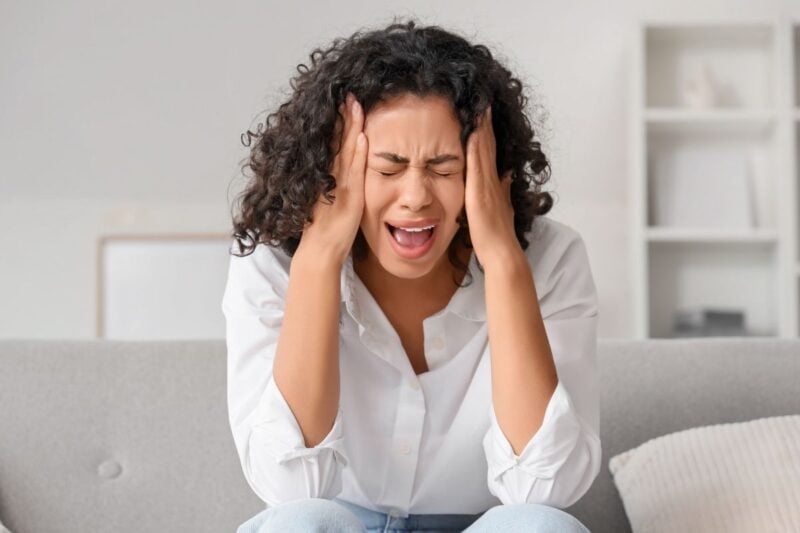
Nobody told you this might be perimenopause. And you’re not even sure what that is.
Here’s everything you need to know — including the symptoms that almost never get mentioned.
Watch First: Menopause Belly Won’t Shift? Try This 3-Step Fix
What Is Perimenopause — and When Does It Start?
Perimenopause is the transition towards menopause — the years when your ovaries gradually produce less oestrogen and progesterone. It ends when you’ve had no period for 12 consecutive months. That’s menopause. Everything before that point is perimenopause.
When it starts:
- Most commonly in the mid-40s
- But for some women, it starts in the late 30s
- Premature ovarian insufficiency (POI) can cause perimenopause before 40 — affecting roughly 1 in 100 women under 40 and 1 in 1,000 women under 30
This transition can last 4–10 years. That’s not a typo. Up to a decade of fluctuating hormones before your periods stop completely. Which is why recognising the early signs matters.
The Symptoms Everyone Knows About
These are the “classic” perimenopause symptoms that get talked about:
- Hot flushes — sudden waves of heat, often with sweating and a flushed face
- Night sweats — waking drenched, needing to change sheets
- Irregular periods — cycles getting shorter or longer, periods becoming heavier or lighter
- Vaginal dryness — reduced lubrication causing discomfort during sex
- Mood changes — low mood, irritability, tearfulness that feels disproportionate
If you have these, your GP should be taking perimenopause seriously as a diagnosis. If they’re not — push back.
The Symptoms Nobody Warns You About
This is the section that matters. These are the symptoms that send women to neurologists, cardiologists, and therapists — when the actual cause is hormonal:
1. Brain Fog
Not just a bit forgetful. Walking into rooms and forgetting why. Losing words mid-sentence. Struggling to concentrate on tasks that used to feel automatic. Many women genuinely fear early dementia.
What’s happening: Oestrogen plays a significant role in memory and cognitive function. As levels fluctuate, so does your ability to think clearly. This is real, it’s measurable, and it’s not permanent.
2. Heart Palpitations
A sudden awareness of your heart beating — sometimes fast, sometimes irregular, sometimes just pounding. Terrifying if you don’t know what’s causing it.
What’s happening: Fluctuating oestrogen affects the autonomic nervous system, which regulates heart rate. Perimenopausal palpitations are usually benign — but always get them checked if they’re new, prolonged, or accompanied by chest pain or shortness of breath.
3. Anxiety — New or Worsening
Women who have never had anxiety in their lives suddenly find themselves with intrusive thoughts, a sense of impending doom, or panic attacks. Others find existing anxiety dramatically worsens.
What’s happening: Oestrogen influences Serotonin and GABA — the brain chemicals that regulate mood and calm. When oestrogen drops, anxiety can spike. This is not a mental health crisis in isolation — it’s often a hormonal one.
4. Joint Pain and Stiffness
Aching hips, sore knees, stiff fingers — particularly in the morning. Women are frequently investigated for rheumatoid arthritis or lupus before anyone thinks to check hormones.
What’s happening: Oestrogen has an anti-inflammatory effect. As levels fall, inflammation in joints increases. This symptom often responds well to HRT.
5. Thinning Hair
Not dramatic clumps — gradual thinning at the temples and crown. Ponytails feel thinner. The parting looks wider.
What’s happening: Oestrogen supports hair growth cycles. Declining oestrogen (and sometimes rising androgens relative to oestrogen) shifts more follicles into the shedding phase. Watch to learn more: Female Hair Loss
6. Changes in Libido
Both directions — some women find their libido drops significantly; others experience a temporary increase. Both are hormonal and both are normal.
What isn’t normal is suffering in silence through painful sex or a completely absent sex drive without discussing it with your GP.
7. Urinary Changes
Needing to rush to the toilet more urgently. Leaking when you cough, sneeze, or exercise. Recurrent UTIs. The genitourinary syndrome of menopause (GSM) affects the bladder, vagina, and urethra — and it’s under-diagnosed and under-treated.
8. Changes in Body Composition
Weight gain — particularly around the abdomen — even when nothing in diet or exercise has changed. Oestrogen shifts fat distribution from the hips and thighs to the abdomen as levels fall.
Sleep Disturbance — Beyond Night Sweats
Difficulty falling asleep, waking at 3am with your mind racing, and waking unrefreshed. Even without visible night sweats, hormone fluctuations disrupt sleep architecture.
Heightened Sensitivity to Alcohol
You’ve had two glasses of wine — and feel significantly worse the next morning than you used to. Declining oestrogen affects how the liver processes alcohol and how the brain responds to it.
When Does It Become a GP Conversation?
Right now, if any of the above is affecting your quality of life.
You don’t need to wait until your periods stop. You don’t need to be a certain age. The NICE guideline (NG23) is clear: a diagnosis of perimenopause in women over 45 is clinical — based on symptoms, not blood tests. You do not need an FSH (follicle-stimulating hormone) test to access HRT if you’re over 45 and have typical symptoms.
If your GP tells you your blood tests are normal and therefore it can’t be perimenopause — they are applying an outdated interpretation of the guideline. Politely but firmly quote NICE NG23.
What Are the Treatment Options?
HRT (Hormone Replacement Therapy)
The most effective treatment for perimenopausal symptoms. Modern body-identical HRT (transdermal oestrogen + micronised progesterone) carries a very different risk profile to the older combined oral HRT from the 2002 WHI study. The risk conversation has shifted significantly in the last decade.
Non-hormonal options
For women who cannot or choose not to use HRT:
- Fezolinetant (Veozah) — licensed in the UK for vasomotor symptoms (hot flushes/night sweats)
- SSRIs/SNRIs — also used to treat depression, but evidence-based for hot flushes and mood symptoms
- Cognitive Behavioural Therapy (CBT) — NICE-recommended for mood and sleep disturbance in perimenopause
- Lifestyle: resistance training, reduced alcohol, sleep hygiene, protein-forward diet
Symptoms That Need Urgent Investigation — Not Just HRT
Perimenopause does not explain:
- Postmenopausal bleeding (any bleeding after 12 months with no period — investigate urgently)
- Significant unexplained weight loss
- Blood in urine or persistent pelvic pain
- A new breast lump
These need investigation first — alongside any hormonal conversation.
The Bottom Line
Perimenopause can start years before you expect it. It can look like anxiety, insomnia, joint pain, brain fog, or a failing marriage — before it ever looks like a hot flush. Knowing what you’re dealing with changes everything.
You are not going mad. You are not getting old before your time. Your hormones are changing — and there is effective help available.
Get the conversation started with your GP. And go in knowing what to ask for.
Want to talk it through with other women who get it?
Similar Topics:
Review Date
This post will be medically reviewed by April 2028
About the Author
Dr Sylvia Kama-Kieghe (FRCGP, FRSM, FRSPH) is a UK-based NHS General Practitioner with over 15 years’ experience in family medicine and women’s health. She is the founder of AskAwayHealth and works clinically in primary care, urgent care and digital health.
She is a honorary lecturer at the University of Sheffield Medical School and involved in teaching and supervising trainee doctors. Her clinical practice includes a strong focus on menopause, menstrual and fibroid-related problems, vulval and vaginal health, and preventive care for women across the life course.
Dr Sylvia is an RCGP (Royal College of General Practitioners) Digital Champion 2026 award finalist and has been shortlisted multiple times for the CAHN Black Healthcare Awards for her work in reducing health inequalities. She also collaborates with the Patient Information Forum (PIF) on projects tackling online health misinformation and improving the quality of patient information.
Through the AskAwayHealth YouTube channel and website, Dr Sylvia aims to provide clear, calm and clinically sound explanations that help women understand their symptoms, know which red flags to look for, and feel more confident when speaking to their own doctors.
Want to know how your comment data is processed? Learn more

Leave a comment
Please fill in the field below to add a comment.